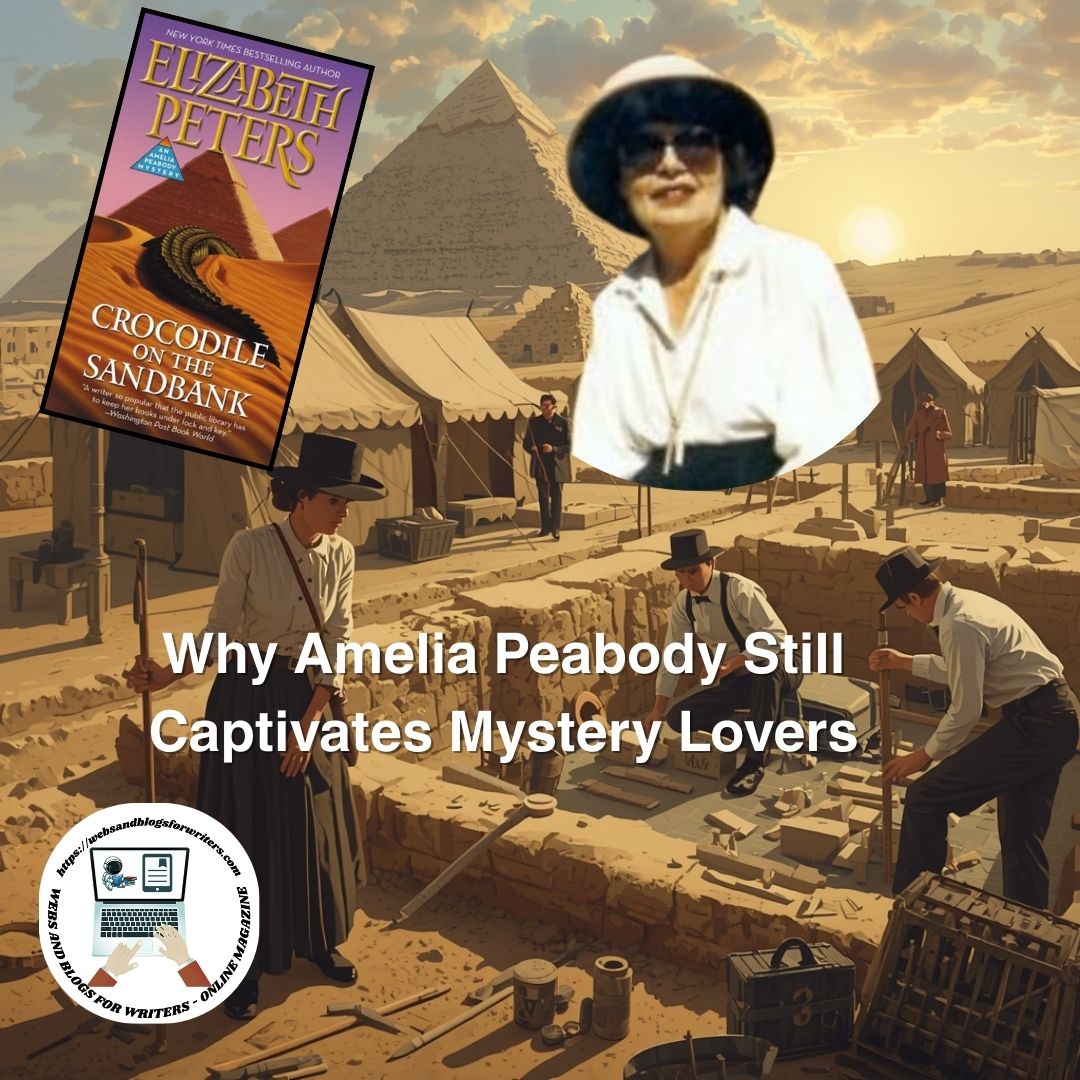
If you haven’t yet made the acquaintance of Amelia Peabody Emerson, you’re missing one of mystery fiction’s most delightfully opinionated heroines. Published in 1975, Crocodile on the Sandbank introduced readers to a Victorian spinster with a parasol, a passion for Egyptology, and absolutely no patience for nonsense.
The Woman Behind the Witty Sleuth
Elizabeth Peters was the pseudonym of Barbara Mertz, an Egyptologist who earned her PhD from the University of Chicago’s Oriental Institute in 1952 (Mussell, 1996). This wasn’t just research for a novelist—Mertz genuinely loved ancient Egypt and brought scholarly authenticity to her fiction. She also published fiction under the name Barbara Michaels and wrote nonfiction works about Egyptology, demonstrating her versatility and deep knowledge of the ancient world.
As mystery scholar Kay Mussell observed, Peters’ work is “fresh, engaging, and thoroughly professional” (Mussell, 1996, p. 836). Mertz created three distinct series featuring recurring heroines, but it was Amelia Peabody who captured the most consistent interest from critics and readers alike.

Why Amelia Peabody Endures
What makes Crocodile on the Sandbank so special? Amelia herself, of course. She’s independently wealthy, fiercely intelligent, and refreshingly unconcerned with Victorian propriety. The Peabody stories are set in the Victorian Era, in Britain or Egypt, where Amelia and her husband Radcliffe Emerson work as archaeologists bent on saving the treasures of ancient Egypt from vandals and grave robbers (Mussell, 1996). Their frighteningly precocious son “Ramses” features in later novels, adding family dynamics to the mystery and adventure.
When Amelia meets the irascible archaeologist Radcliffe Emerson amid the pyramids and tombs of Egypt in this first book, sparks fly—though neither would admit it at first.
The chemistry between Amelia and Emerson—whom she affectionately calls “Emerson” while he calls her “Peabody”—remains one of mystery fiction’s great love stories. Their banter crackles with intelligence and genuine affection, even when they’re arguing about excavation techniques or fending off mummy-costumed villains. As Mussell notes, they “refer to each other by their surnames even after their marriage” (1996, p. 835), a delightful quirk that emphasizes their equality and mutual respect.
A Feminist Icon in Bustle and Boots
Amelia Peabody was a proto-feminist before the term became popular in genre fiction. Mussell describes Peters’ female protagonists as “intelligent, witty, and intrepid” with “all nevertheless independent women who are men’s intellectual equals and are often in a position of equality and trust” (1996, p. 835). Amelia defies gender expectations at every turn, insisting on participating in archaeological digs, solving mysteries through logic and observation, and maintaining her independence even after marriage.
The historical setting allows Peters to explore Victorian attitudes toward women while giving Amelia opportunities to challenge those limitations. Whether she’s wearing sensible boots instead of delicate slippers or wielding her famous parasol as both sunshade and weapon, Amelia carves her own path through a male-dominated world.

Perfect for Book Clubs and Mystery Lovers
Crocodile on the Sandbank offers everything a mystery book club could want: compelling characters, atmospheric setting, clever plotting, and plenty to discuss. Peters’ novels are “written with humor, particularly the witty, epigrammatic dialogue between male and female characters” (Mussell, 1996, p. 836). The blend of archaeology, romance, and mystery creates rich conversations about historical accuracy, genre conventions, and feminist themes in popular fiction.
For Sisters in Crime members and mystery enthusiasts, the Amelia Peabody series demonstrates how historical mysteries can entertain while challenging social norms. Peters proved that readers craved smart, capable female protagonists decades before the current boom in feminist historical fiction. Mussell notes that Peters’ mysteries often “mock the conventions of gothic or domestic mysteries without quite becoming full-blown parodies of the form” (1996, p. 836), creating a sophisticated balance between homage and innovation.
Start Your Egyptian Adventure
If you’re reading Crocodile on the Sandbank for the first time, you’re in for a treat. If you’re revisiting Amelia and Emerson’s first adventure, you’ll likely find new layers to appreciate. Either way, grab your parasol and prepare for mystery, romance, and a healthy dose of Victorian wit.
The sands of Egypt await—and so does one of mystery fiction’s most unforgettable sleuths.
References:
Mussell, K. (1996). Peters, Elizabeth. In J. M. Reilly (Ed.), Crime and Mystery Writers (pp. 835-836). St. Martin’s Press.
Peters, E. (1975). Crocodile on the Sandbank. Dodd, Mead & Company.
A Note from our Editor
We would encourage any North Florida Writers who would like to be a featured author on the North Florida Writers Tour website then please get in touch. Other Authors and Writing Business People who would like to be featured on this site use our CONTACT US form. Our site has an excellent monthly Newsletter that contains exclusive content. Join in on the fun! CLICK HERE!
If you found our article helpful, we hope you will consider contributing to our coffee fund to keep us up and running creating more helpful blogs now and in the future!

You must be logged in to post a comment.